

Gold is valuable because people have found uses for it for thousands of years, many of which have little to do with what it can produce.
The precious metal still has its share of critics.
Unlike a business, a bar of gold doesn’t produce goods, create jobs, or generate cash flow simply because someone owns it.
Warren Buffett famously illustrated this point by imagining all the world’s gold melted into a giant cube that would remain the same size a century later.
But that criticism defines usefulness too narrowly.
Gold has practical applications, physical properties, and cultural traditions continue to drive its demand around the world.
Its value comes from a combination of these characteristics rather than any single “use.”
Why has gold been valuable throughout history?
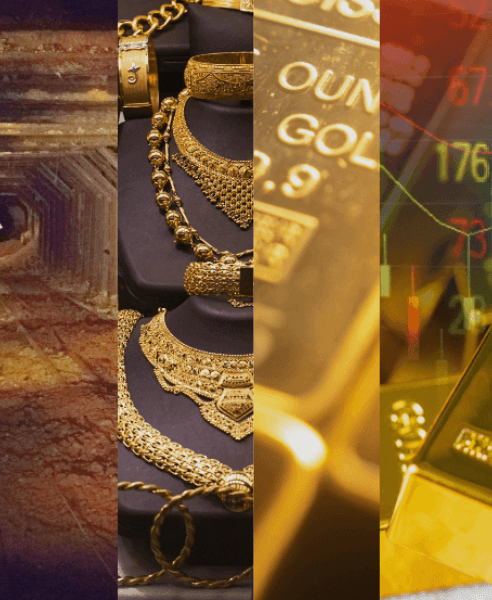
Long before gold appeared inside smartphones or semiconductors, people found another use for it: money.
Gold and silver were used in transactions more than 4,000 years ago in ancient Mesopotamia and Egypt. They later became widely used for coins, a role they continued to play for centuries.
Gold was particularly well suited to this purpose because it combines several unusual physical characteristics. It’s scarce, durable, divisible, portable, recognizable, and difficult to counterfeit.
Unlike many commodities, it doesn’t rot, rust, or spoil.
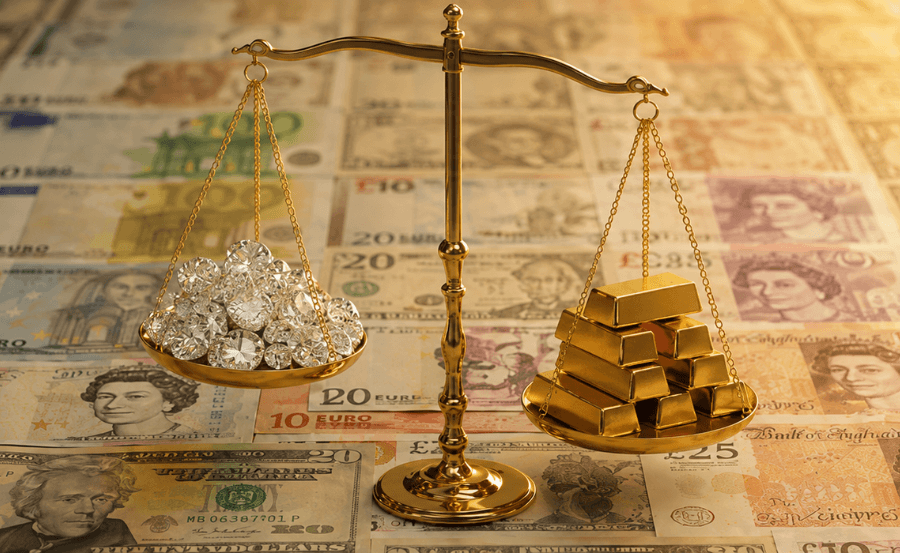
Gold eventually became deeply embedded in monetary systems, including the history of the United States.
Its role has changed as currencies evolved, but thousands of years of accumulated acceptance didn’t disappear when countries abandoned gold standards.
Explore gold’s monetary properties in “Six reasons why gold is the best money.”
Why is gold still considered valuable?
Gold no longer circulates as everyday money in most countries, but demand for it comes from many different sources.
- Investors buy it.
- Central banks hold it.
- Families pass it between generations.
- Manufacturers consume it.
The reasons can differ considerably from one buyer to another.
Gold retains cultural significance
Few places illustrate gold’s cultural importance better than India.
Gold plays a central role in Indian weddings, festivals, gifting, jewelry, savings, and family wealth[1]. The World Gold Council estimates that weddings generate approximately half of India’s annual gold demand[2].
Gold purchases also feature prominently in festivals including Diwali and Akshaya Tritiya[3].
These traditions remain economically significant today. Even as record prices pressured jewelry demand in 2026, wedding- and festival-related purchases remained relatively resilient[4].
India provides an especially visible example, but gold carries cultural associations with wealth, status, celebration, and security across many societies. That creates sources of demand extending well beyond Western investment markets.
Investors value gold as a financial asset
Investors have another reason to own gold: they value the metal itself as an asset.
Gold can serve as a long-term store of value and a component of an investment portfolio, but critics point to its lack of productivity as an opportunity cost of ownership.

Does gold have practical uses?
Yes, gold has far more practical uses than the claim that it “does nothing” may suggest.
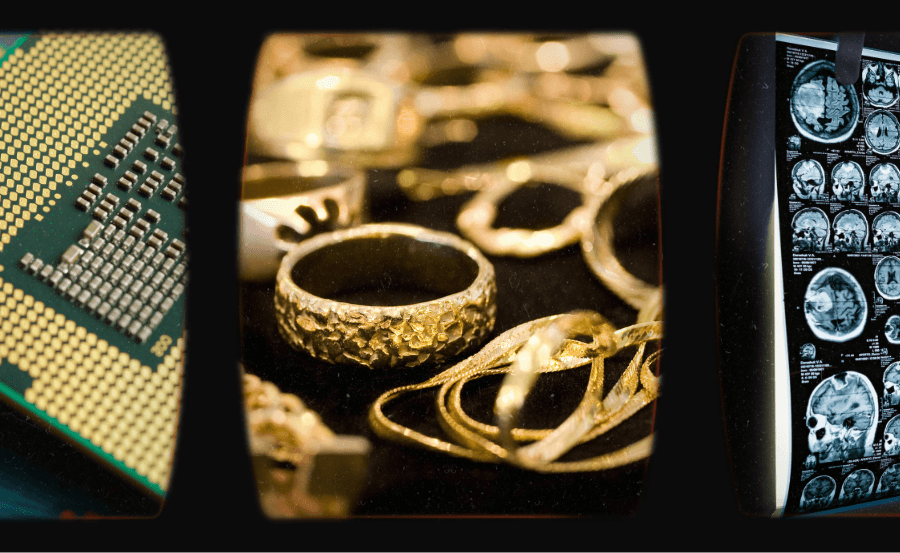
Jewelry remains one of the largest sources of gold demand worldwide. In 2025, more than 1,600 metric tons of gold went into jewelry fabrication[5].
Electronics account for roughly 80% of the gold used in technology[6]. Gold conducts electricity and resists corrosion, properties that make it valuable for contacts, connectors, semiconductors, and other electronic components.
Gold has also attracted interest in medicine because its properties change in useful ways at extremely small scales. Researchers have developed gold nanoparticles for diagnostic and molecular-imaging applications[7].
Their properties allow them to function as probes and potential contrast agents in techniques including CT, optical imaging, and photoacoustic imaging.
None of this means every criticism of gold is wrong.
What are the disadvantages of owning gold?
Some of the disadvantages of owning gold include:
- Traditional physical gold doesn’t inherently produce income.
- Secure storage and insurance can cost money.
- Its dollar price can experience significant volatility.
- An investor who owns gold forgoes whatever returns that capital might have generated elsewhere.
Physical ownership can also introduce practical considerations such as dealer spreads, transportation, and storage.
Investors may accept those disadvantages because they value gold for other reasons. Others may decide those tradeoffs don’t fit their objectives.
Either way, evaluating gold requires considering its limitations alongside its advantages.
Can gold become a productive asset?
Yes, gold can become a productive asset. The criticism that gold doesn’t generate income assumes the metal remains idle, but it doesn’t have to.
Gold owners can lease their metal to businesses that use gold as inventory or work in progress. Mints, refiners, jewelers, and other gold-using businesses can lease the metal rather than purchasing all the gold they need outright.
In return, the business pays the owner a yield in gold.
An existing asset finances productive economic activity and provides the owner with the opportunity to earn additional ounces.
Far from being useless, gold can serve as:
- Money
- A culturally significant asset
- A practical material
- Productive capital
At the same time!
What can your gold do for you?
Gold’s value has never depended on a single use.
Its physical properties helped establish its role as money.
Cultural traditions continue to sustain demand around the world.
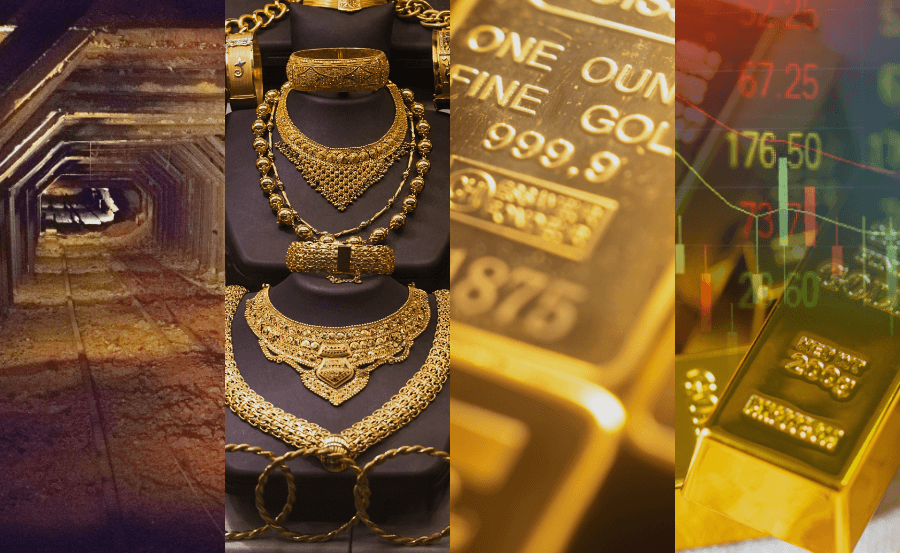
Jewelers, electronics manufacturers, researchers, investors, and central banks value gold for different reasons.
Today, gold owners have another possibility: putting an already valuable asset to productive use.
Sources:
- https://www.gold.org/goldhub/research/jewellery-demand-and-trade-india-gold-market-series
- https://www.gold.org/about-gold/gold-demand/geographical-diversity/india
- [Downloads PDF] https://www.gold.org/download/file/18332/Indias-Gold-Market-Reform-and-Growth.pdf
- https://www.gold.org/goldhub/research/gold-demand-trends/gold-demand-trends-india-focus-q2-2026
- https://www.gold.org/goldhub/research/gold-demand-trends/gold-demand-trends-full-year-2025
- https://www.gold.org/about-gold/gold-demand/by-sector
- https://pmc.ncbi.nlm.nih.gov/articles/PMC7032998/