


Whether it’s better to own gold or invest in gold depends on the individual, their circumstances, and their goals.
Owning physical gold suits those who want an asset with no counterparty risk, but it pays nothing and costs money to store.
Investing through ETFs or mining stocks suits those who want convenient, dollar-priced exposure, but it adds intermediaries and fees.
Furthermore, the question may be incomplete. Increasingly, gold owners are finding another way to hold their metal: as a productive asset.
Is it better to own gold, invest in gold, or earn a yield on gold?
Please note: All content is provided strictly for general informational and educational use. This information should not be interpreted as financial advice, nor should it replace professional consultation with an advisor.
Comparing gold: Owning vs. Investing (vs. Leasing)
| Own (hold) | Invest (physical gold ETF) | Earn a yield (lease) | |
|---|---|---|---|
| What you hold | Coins or bars | Shares in a gold-backed trust/fund | Legal title to physical gold leased to a business |
| Measured in | Ounces | Dollars | Ounces |
| Income | None | No regular income* | Interest paid in gold |
| Ongoing costs | Storage and insurance | Expense ratio | Provider spread, built into the yield |
| Main risks | Theft, loss, negative carry | Gold-price risk, intermediary exposure, fee drag | Lessee performance |
| Access | Sell to a dealer | Trade in market hours | Committed for the lease term |
What does it mean to own gold?
To own gold means holding physical coins or bars, at home or in a vault.
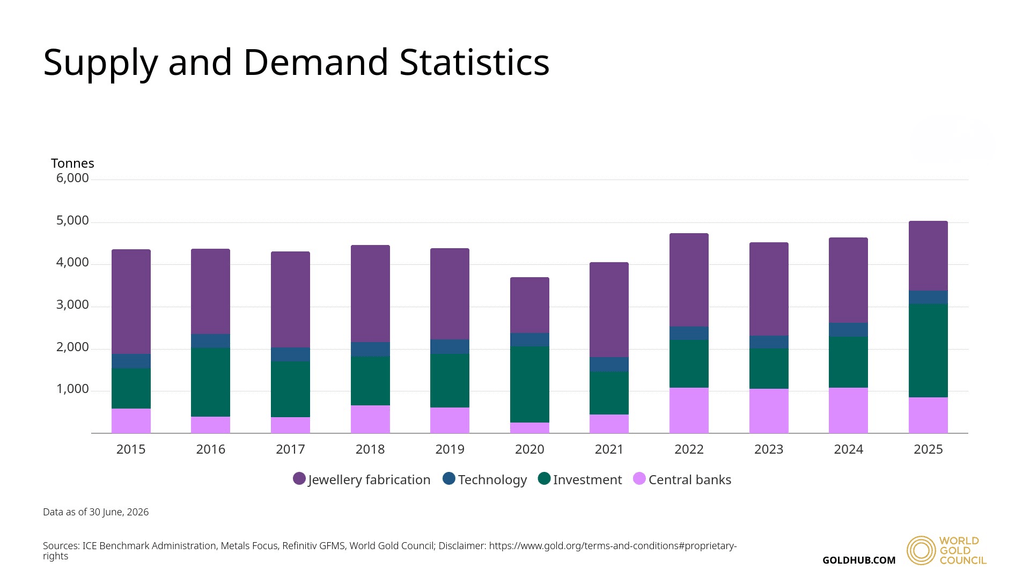
The core appeal behind this option is that the value of your gold holdings don’t depend on another party’s promise to pay. But there are downsides, including:
- Purchase premiums. Dealers sell above spot price. Buyers pay that premium up front, before any holding costs begin.
- Storage and insurance. Professional vaulting adds an ongoing cost; for example, The Perth Mint currently charges 1% per year for allocated gold storage[1].
- Opportunity cost. Gold held passively produces no regular cash flow[2], and capital allocated to gold can’t be used for other income-producing opportunities.
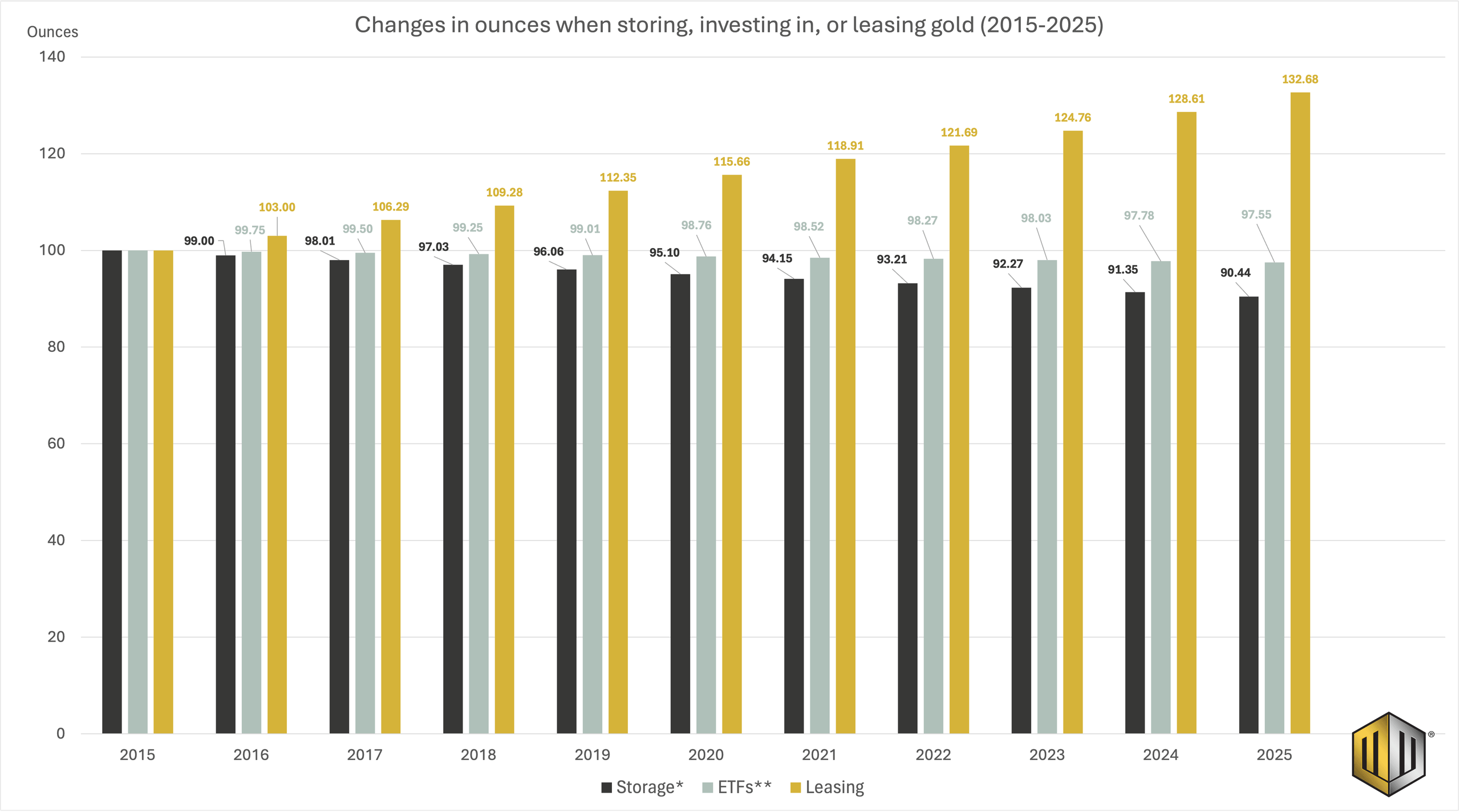
For an owner who pays storage and receives no income from the metal, these costs create negative carry[3]. When fees are paid from the position, the number of ounces owned shrinks over time.
For a closer look at these costs, read:
What does it mean to invest in gold?
In most financial media, “investing in gold” means buying a product that tracks the gold price. The position is measured in dollars, not ounces. The main options are:
- Gold ETFs. Shares in a fund that holds gold. Physically backed gold funds charge annual expenses; for example, IAU currently charges a 0.25% sponsor fee[4].
- Mining stocks. Shares in companies that produce gold. Their prices reflect company performance as well as the metal.
- Futures. Contracts to buy or sell gold at a future date, typically involving leverage.
What are the downsides to investing in gold?
These products are convenient and easy to trade, but they also add intermediaries and fees.
- An ETF investor owns shares in a financial vehicle whose assets may include physical gold held by a custodian, rather than directly holding coins or bars[4].
- For physically backed trusts such as IAU, gold may be sold to pay fund expenses, reducing the fractional amount of gold represented by each share over time[4].
- These products provide financial exposure to gold or gold-related businesses, rather than generating additional ounces of gold simply by holding the position.
What does it mean to earn a yield on gold?
To earn a yield on gold, owners lease their metal to businesses that use it as inventory or work in progress. The owner keeps title to the metal, and the business pays yield for its use, in gold.
Third-party coverage has noted the same approach as a way to turn gold into an income stream[5].
For the business on the other side of the lease, renting their gold can also solve a financing problem. Consider a jeweler who borrows dollars to finance gold inventory, creating a mismatch between a dollar liability and a gold asset.
Gold price volatility can require the business to hedge that exposure. Instead, gold financing matches a gold asset with a gold liability, which reduces the price mismatch and eliminates the need to hedge the inventory’s gold-price exposure[6].
How is earning a yield different from investing in gold?
A physically backed gold ETF offers the closest comparison with leasing because both provide exposure to physical gold through an intermediary.
The differences lie in what the investor holds and where the return comes from.
- What is held. An ETF shareholder holds a claim on a fund. A lessor holds title to physical metal.
- Unit of measure. ETF returns are measured in dollars. Lease yield is paid in ounces.
- Source of return. A physically backed gold ETF seeks to reflect movements in the price of gold, less fund expenses[4]. Lease yield comes from a business’s demand to use gold[7].
What are the risks of earning a yield on gold?
Earning a yield is not risk-free. Key considerations include:
- Counterparty risk. The lessee must return the metal. Vetting, insurance, and deal structure matter.
- Liquidity. Leased metal is committed for the lease term.
- Variable yields. Rates move with market conditions.
Find out if gold leasing is right for you
Investors often own physical gold as a long-term store of wealth, while gold investment products offer convenient, dollar-priced exposure[2].
Gold leasing offers a third option: owning gold while earning additional ounces.
Each approach involves trade-offs, so which one fits is a personal decision. If you’re curious about earning a yield, a few quick questions might help.

Sources:
- https://www.perthmint.com/invest/information-about-gold-and-silver-storage/fees/
- https://www.gold.org/goldhub/research/relevance-of-gold-as-a-strategic-asset
- https://www.gold.org/goldhub/research/gold-deposit-rates-guidance-paper
- https://www.ishares.com/us/literature/prospectus/p-ishares-gold-trust-prospectus-12-31.pdf
- https://www.gold.org/goldhub/research/gold-demand-trends/gold-demand-trends-q2-2016/focus-china%E2%80%99s-commercial-banks
- https://money.com/gold-yield-generate-income/