

Retirement changes what you need from your portfolio.
During your working years you might focus primarily on accumulating assets. Over time those assets must help to support your spending.
Traditionally, gold has presented a challenge in that transition. Investors may own it for diversification and wealth preservation, but physical gold doesn’t inherently produce additional ounces.
If a retiree sells gold to fund their expenses, each sale reduces the amount of gold they own. Gold yield offers another possibility.
By putting gold to productive use, you can potentially earn more ounces to supplement your retirement spending and preserve more of your original holdings.
Please note: All content is provided strictly for general informational and educational use. This information should not be interpreted as financial advice, nor should it replace professional consultation with an advisor.
How is gold traditionally used in retirement?
Retirement portfolios commonly rely on assets such as stocks for long-term growth and bonds for income. Gold typically serves a different purpose.
Investors may hold it for diversification and wealth preservation, while gaining exposure through physical bullion, gold ETFs, or a gold IRA.
- Gold ETFs: Gold ETFs can provide convenient exposure to the gold price, but investors generally pay ongoing fund expenses[1] and own shares in a fund rather than physical gold.
- Gold IRAs: Gold IRAs enable investors to hold physical gold in a tax-advantaged retirement account, but they can involve custodian, storage, and other fees while generally restricting access to the metal under IRA rules[2].
- Physical gold: Traditionally, physical gold doesn’t produce additional ounces or cash flow.
Risk-adjusted returns of a hypothetical portfolio with and without gold*
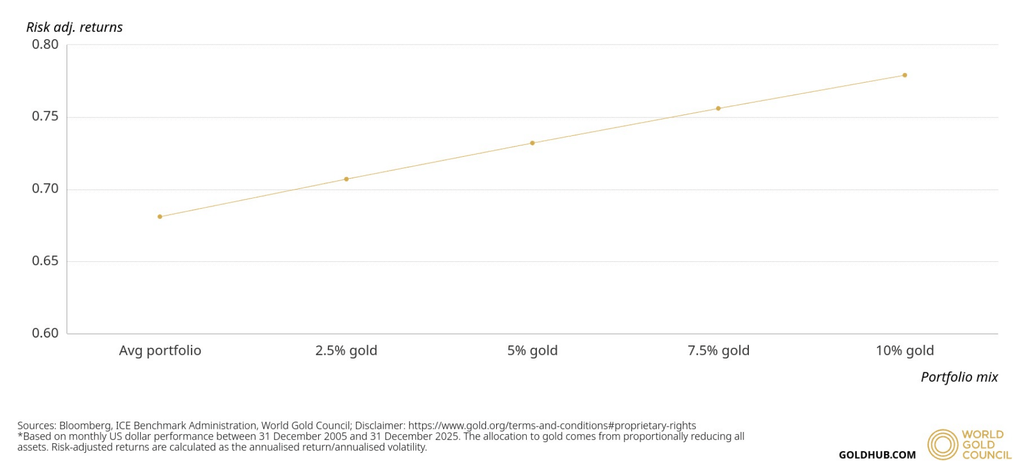
The impact of physical gold on retirement planning
Increasing your holdings requires committing more money to gold that could otherwise remain available for spending or investment elsewhere. Holding physical gold may also involve costs such as secure storage.
Gold leasing empowers investors to earn additional ounces on gold they already own, potentially increasing their holdings without relying exclusively on additional purchases.
How to incorporate gold yield into a retirement strategy
- Calculate how many additional ounces you’d like to earn.
- Identify the role of gold yield in supporting your retirement portfolio.
- Create a process for converting gold income into cash.
- Set benchmarks for when your gold income plan needs to change.
- Adjust how you use gold income as retirement approaches.
Earning gold is only part of the process. You also need to decide how much income you want, what you’ll do with it, and how that plan changes as retirement approaches.
1. Calculate how many additional ounces you’d like to earn
Start with your desired income and work backward.
If your goal were 1 ounce of annual gold income and you assumed a hypothetical 4% yield:
1 ÷ 0.04 = 25 productive ounces
Someone 30 years from retirement can leave their yield to compound. Over time, this could increase their annual gold income without requiring more capital.
Someone approaching retirement can sell their yield, liquidating the asset while potentially maintaining the capital required to meet their target.
However, this assumes that the hypothetical yield stays at 4% annually. It’s important to remember that yield rates can change and future opportunities aren’t guaranteed.
How do you know how much gold yield you should plan for?
- Estimate how many ounces different reasonable yields could produce.
- Calculate what those ounces would be worth across a range of hypothetical gold prices.
- Revisit those assumptions as retirement gets closer.
2. Identify the role of gold yield in supporting your retirement portfolio
Someone decades from retirement might prioritize accumulating and redeploying earned ounces. As retirement approaches, that objective could change.
One option is to use gold yield directly for retirement spending by converting earned ounces into dollars. Another is to let other income-producing assets fund current expenses while retaining some or all of the gold earned.
You could also divide the income between those purposes.
Define the objective concretely: “I want gold yield to provide part of my annual spending” creates a different strategy from “I want to keep increasing my ounces while other investments provide cash flow.”
3. Create a process for converting gold income into cash
Gold yield is paid in gold, while most retirement expenses are paid in dollars.
Someone who doesn’t expect to retire for another 20 years may have little reason to establish a schedule today.
Someone approaching retirement may want to consider:
- How often they’ll need cash
- How much gold they expect to convert
- How much they want to retain
The goal is to connect an ounce-denominated income stream with real-world expenses without automatically selling every ounce you earn.
Don’t forget taxes!
Receiving gold rather than dollars doesn’t necessarily postpone the tax consequences.
Tax circumstances vary, so consult a qualified tax professional when incorporating gold yield into retirement planning.
4. Set benchmarks for when your gold income plan needs to change
A retirement income strategy shouldn’t remain static as your circumstances change. Establishing benchmarks in advance can help you identify when it’s time to revisit how you use your gold income.
Those benchmarks might include:
- Reaching a certain number of productive ounces
- Getting within a specified number of years of retirement
- Seeing your expected retirement expenses change significantly
You might also revisit your plan if the yield available on your gold changes enough that it no longer produces the amount of income you anticipated.
Someone decades from retirement may initially focus on accumulating and redeploying earned ounces, then reassess that approach as retirement draws closer.
Someone already approaching retirement may review their assumptions more frequently as their income needs become clearer.
5. Adjust how you use gold income as retirement approaches
Traditional retirement planning often calls for adjusting a portfolio as retirement approaches[3].
Younger investors generally have more time to recover from market losses. Investors nearing retirement may prioritize preserving capital and generating income.
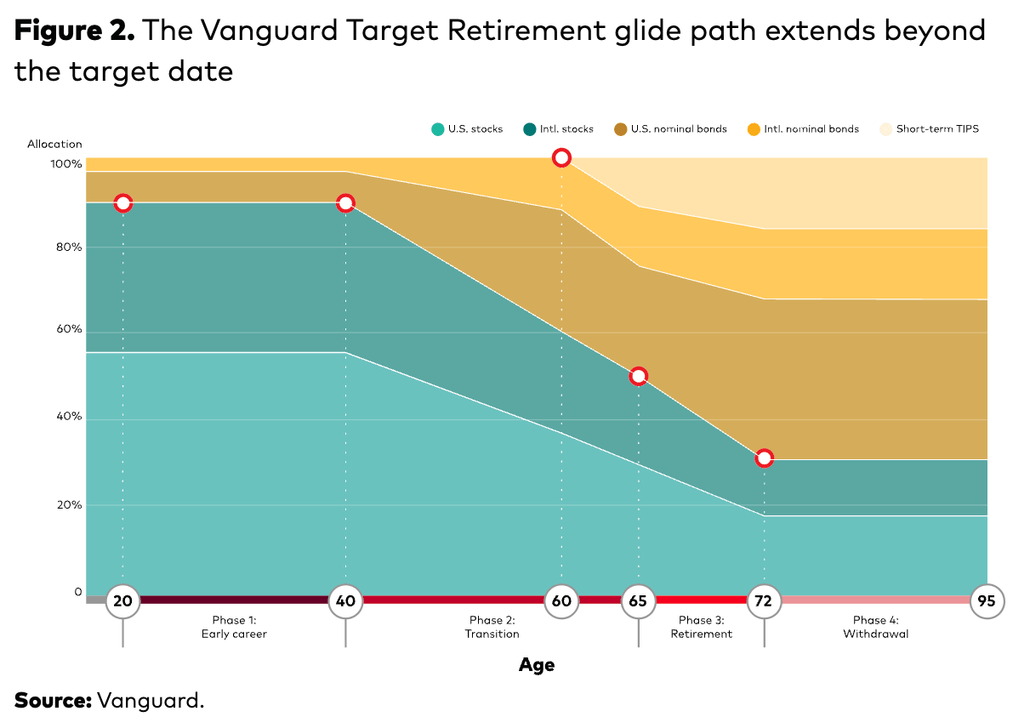
Your approach to gold yield can evolve with your retirement timeline as well. With the benchmarks you established in the previous step, recalculate the income your productive gold can generate:
Productive ounces × current yield = potential annual gold income
Then reassess whether retaining, redeploying, or converting that income still supports the role you’ve established for gold within your retirement strategy.
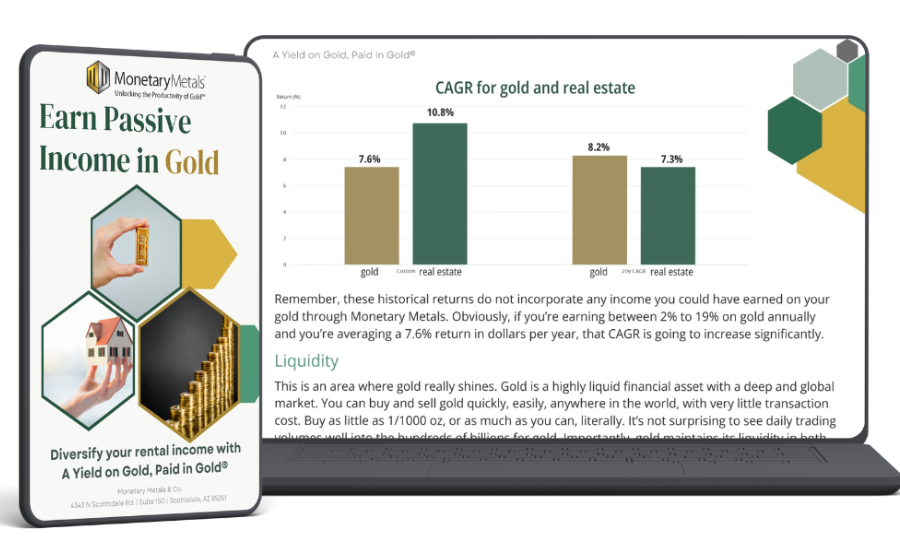
Discover how to earn passive income in gold
Incorporating gold yield into a retirement strategy starts with understanding how your gold can become productive.
Download Earn Passive Income in Gold to explore:
- How gold leasing works
- How you can earn a Yield on Gold, Paid in Gold®
- How it compares with another common income-producing asset: real estate
Sources:
- https://www.investor.gov/introduction-investing/general-resources/news-alerts/alerts-bulletins/investor-bulletins/mutual-fund-and-etf-fees-and-expenses-investor-bulletin
- https://www.irs.gov/retirement-plans/retirement-plans-faqs-regarding-iras
- https://investor.vanguard.com/investor-resources-education/retirement/savings-retirement-funds