

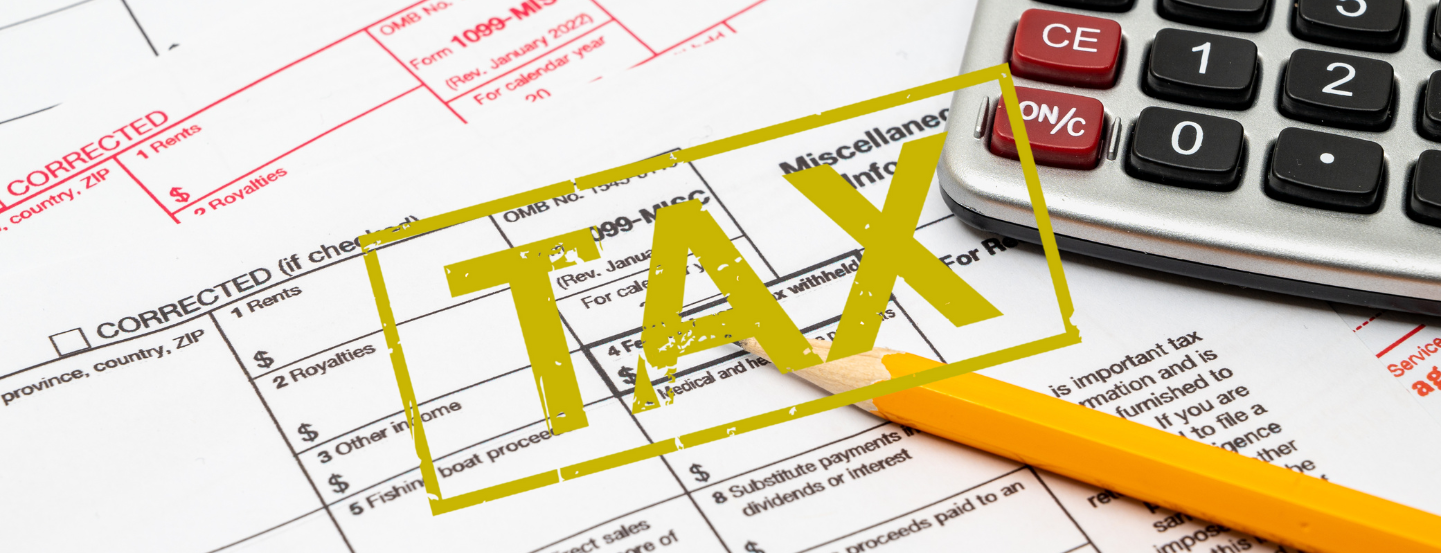

How do you report and account for income paid in metal rather than cash?
Earning income in physical gold or silver—rather than in dollars—raises important questions when it comes to tax reporting, regardless of where you’re domiciled.
At Monetary Metals we don’t provide tax advice. But we frequently assist clients and their advisors by explaining how our leases and bonds function and what documentation we provide to support tax reporting.
This article outlines the core tax considerations for U.S. and international clients, including how gold yields are treated, what happens when metal is transferred or redeemed, and what you’ll need for accurate recordkeeping.

U.S. taxpayers: reporting metal-denominated income
Income is taxable when received—even in metal
Under U.S. tax law, gold or silver yields that are received are considered taxable as ordinary income in the year it is received, regardless of whether it’s paid in dollars or in-kind. The IRS treats gold and silver income the same as any other source of income: valuation is based on the fair market dollar value on the date of receipt.
Example: You earn 1 ounce of gold as lease yield. On the day it’s paid, gold closes at $2,300. You must report $2,300 as income for that year.
This applies whether you receive metal monthly or annually. Each payment is valued at the market price on the date it is credited to your account.

Cost basis and capital gains
The dollar value of each gold or silver payment also becomes your cost basis for capital gains purposes. If you later sell the ounce for $2,500, you’d recognize a $200 gain.
It’s important to note: income is not deferred until you sell the metal. It must be reported in the tax year it is received.
Forms and documents provided
To assist with tax reporting, Monetary Metals provides:
Monthly and year-end statements showing:
- The weight of metal received as yield
- The corresponding dollar value on payment date
- The total dollar value of the metal income for the year
IRS Form 1099:
- Form 1099-INT or 1099-MISC (depending on product)
- Reflects the cumulative dollar value of your metal income
- Does not report total holdings or account balances
You’ll generally report this income on Form 1040 Schedule B (or Schedule C if applicable).
If you later sell metal, report gains using Form 8949 and Schedule D.
International clients: tax treatment and metal transfers
Transferring metal between accounts
Clients often ask if moving metal from a professional vault into a Monetary Metals account is a taxable event. The answer depends entirely on your jurisdiction.
In some countries, changing location or custodian of gold may be seen as a “disposition”—a taxable event—even if you retain ownership. The key issue is whether your beneficial interest has changed.
Generally, if metal is simply reallocated between custodians without changing its economic use, it’s not taxable. But if it’s contributed to a productive use, such as a lease or bond, that may be different.
Entering a lease or bond: change of use
Some tax authorities may view contributing metal to a yield-bearing product as a change in use, triggering capital gains on the difference between your original acquisition price and the market value at the time you enter the contract.
Local treatment varies, so consult a tax advisor experienced in commodities and cross-border asset flows.
We provide documentation to help—delivery receipts, transaction summaries, and income statements—but we do not file or report to foreign tax agencies.
Taxation in key international jurisdictions
United Kingdom (HMRC)

- Income type: Gold yields are taxed as income, not capital gains.
- Valuation: Convert the value of gold to GBP on the date received.
- Example: 1g of gold at £55/g = £55 taxable income.
- Reporting: Use Self-Assessment tax return.
- Tax rate: 20%, 40%, or 45% depending on income bracket.
- ISAs/SIPPs: Physical gold yield is not eligible for tax shelters unless through a qualifying fund.
Canada (CRA)

- Income type: Gold income is taxed as ordinary income.
- Valuation: Convert the value of gold to CAD on date of receipt.
- Example: 2g of gold at CAD $90/g = $180 taxable income.
- Reporting:
- T1 General, Line 12100 for interest income
- Schedule 3 and Line 12700 for capital gains
- Other considerations:
- Gold is treated as a commodity, not a currency
- If gold is stored abroad and total foreign property exceeds CAD $100,000, you must file Form T1135
Australia (ATO)

- Income type: Gold income is assessable income.
- Valuation: Use AUD market value on date of receipt.
- Tax rate: Based on marginal income tax brackets (0–45% plus Medicare Levy).
- Timing: Income is reported in the financial year of receipt.
Redemption, valuation, and cost basis
Contributing metal to your account
When clients send physical metal, it is assessed based on:
- Spot price at time of receipt
- Purity and form (e.g., coins, bars, ingots)
- Refinery origin and marketability
Non-standard items may be discounted (or occasionally carry a premium). This valuation forms the initial cost basis for tax tracking.
Redeeming metal from your account
When clients request delivery:
- Standard bullion is shipped (e.g., kilo bars, 1 oz coins)
- Delivery is based on current inventory and location
- Shipping, handling, and applicable premiums may apply
- The original cost basis stays with the metal for future capital gains tracking
Key principles to remember
- Income is taxed when received: You must report the dollar-equivalent value of gold or silver income at the time it’s credited—not when it’s sold.
- Gold income is ordinary income: Not a capital gain. This is true in the U.S. and many other jurisdictions.
- The cost basis is locked at receipt: That’s the amount used to calculate future capital gains or losses.
- Documentation matters: We provide monthly statements, delivery confirmations, and year-end summaries to support your reporting needs.
- Consult a professional: Especially for non-U.S. clients, working with a tax advisor familiar with your country’s rules is essential.
Earning income in gold or silver offers many advantages—but it does introduce complexity in tax treatment.
Understanding when income becomes taxable, how to value it, and what reporting is required can help you stay compliant and avoid surprises.
At Monetary Metals, we aim to make the process transparent and well-documented, so you and your tax advisor can file with confidence.