

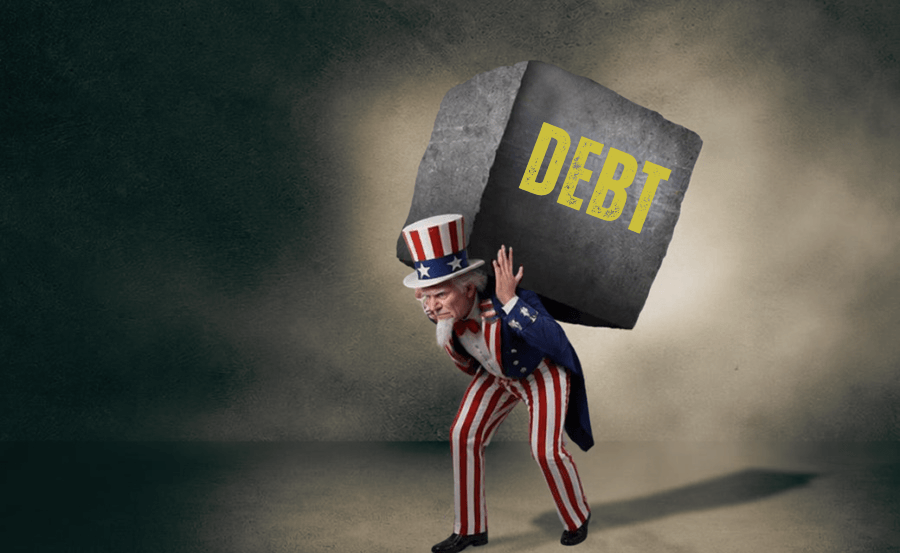

A government can accumulate an enormous amount of debt without reaching a clear breaking point.
Instead, the consequences emerge through what it takes to keep carrying that debt.
More interest.
More borrowing.
And increasingly difficult choices about taxes, spending, and economic policy.
Understanding these pressures is more useful than waiting for a number that declares the debt officially “too high.”
When does government debt become “too high”?
Government debt becomes excessive when carrying it begins to constrain a government’s finances and economic choices.
The amount of debt a government can carry sustainably is influenced by many variables, including:
- borrowing costs
- revenues
- spending commitments
- economic growth
- investor demand
- the ability to refinance existing obligations
Therefore, rising interest costs, persistent borrowing needs, and declining fiscal flexibility are more revealing than the headline debt figure alone.
How close is the US to defaulting on its debt?
Current conditions don’t indicate that the U.S. is close to defaulting on its debt. The U.S. continues to meet its debt obligations and borrow in global capital markets [1].
Historically, the most immediate risk of the United States missing a required payment comes from the statutory debt limit.
Reaching that limit doesn’t mean the country has become economically insolvent, but it does restrict the Treasury’s ability to borrow money to meet it’s current obligations.
What’s going to happen if the national debt gets too high?
There probably won’t be a single event announcing that the national debt has become excessive.
Instead, the effects can accumulate through the federal budget and financial system.
- Rising interest costs reduce fiscal flexibility.
- Borrowing can become more expensive.
- Government borrowing can crowd out economic growth.
Rising interest costs reduce fiscal flexibility
As outstanding debt grows or existing debt is refinanced at higher rates, servicing it requires more federal resources.
Money devoted to interest can’t simultaneously pay for other priorities. Policymakers must instead reduce other spending, increase revenue, borrow more, or accept some combination of those choices.
This can also reduce what economists call fiscal space[2]: the government’s capacity to respond to new priorities or economic shocks without creating additional financial strain.
That flexibility can be particularly valuable during recessions, wars, financial crises, and other emergencies, when governments often borrow more.
Entering those periods with a larger debt and interest burden can make additional borrowing more expensive and the necessary fiscal tradeoffs more difficult.
Borrowing can become more expensive
The Treasury can’t dictate the yields investors will accept indefinitely.
Treasury yields reflect:
- monetary policy
- inflation expectations
- economic conditions
- investor demand
- fiscal conditions
- alternative investment opportunities
If investors require higher yields to absorb additional Treasury issuance, the government’s financing costs rise. Higher interest costs can then enlarge future deficits and borrowing requirements.
This creates the possibility of an unfavorable feedback loop:
more debt > more interest expense > larger deficits > more debt
Government borrowing can crowd out economic growth
The federal government isn’t the only borrower looking for capital.
Businesses need financing to expand operations, purchase equipment, develop technologies, and make other productive investments.
Large and persistent government borrowing can increase competition for available capital and put upward pressure on interest rates. Economists refer to this effect as crowding out[1].
Fewer private investments can eventually mean weaker productivity and economic growth, creating an additional challenge for an indebted government.
Economic growth helps expand incomes, taxable activity, and the resources available to support government obligations. Slower growth can make an already large debt burden more difficult to carry.
Can the US ever pay off its national debt?
Yes, it’s possible for the United States to pay off its national debt, in theory. In fact, we’ve come close to doing so in the past.
After World War II, U.S. federal debt was extremely high relative to the size of the economy. Over subsequent decades, economic growth and inflation outpaced the growth of outstanding debt, gradually reducing that burden relative to GDP[3].
The United States also ran federal budget surpluses from fiscal years 1998 through 2001, allowing debt held by the public to decline.
However, eliminating the national debt isn’t necessary for improving the country’s fiscal position. Reducing the national debt to zero would require an extraordinary fiscal shift.
Stabilizing debt and allowing economic growth to reduce its relative burden can be more realistic than eliminating every outstanding government bond.
What would happen if the US paid off all its national debt?
Paying off the entire national debt would have an unusual consequence: it would also eliminate an important financial asset.
Treasury securities currently perform many functions beyond simply funding Washington.
They’re widely used as collateral, held as reserves, incorporated into investment portfolios, and used as benchmarks for pricing other financial assets. The Treasury market also helps establish the so-called “risk-free rates” used throughout finance.
Eliminating the national debt would remove those securities from the financial system.
Markets could adapt, but eliminating Treasury debt altogether is a very different objective from reducing an excessive debt burden. A government doesn’t need to owe nothing to maintain sustainable finances.
How do governments reduce excessive debt?
Governments have several ways to bring debt back under control, but none of these offer a painless shortcut.
- Governments can reduce spending, but cuts affect the recipients of government expenditures.
- They can increase tax revenue, but higher taxes reduce income or capital available elsewhere in the economy.
- They can grow the economy faster than the debt, but improvements in productivity and economic output can take years to materialize.
- They can allow inflation to reduce the real value of existing debt, but this can reduce purchasing power and lead investors to demand higher yields on new debt.
- They can restructure or default on the debt, but this could cause financial instability, loss of investor confidence, and higher future borrowing costs.
What does excessive debt mean for you?
Excessive government debt can influence the cost of capital, the purchasing power of your wealth, and the conditions under which your investments generate returns.
Three questions can help you evaluate your exposure:
- Could higher borrowing costs change your financial decisions?
- How much purchasing power are your returns actually preserving?
- How dependent is your portfolio on one economic outcome?
Please note: All content is provided strictly for general informational and educational use. This information should not be interpreted as financial advice, nor should it replace professional consultation with an advisor.
Could higher borrowing costs change your financial decisions?
Higher interest rates can matter even when you have substantial liquidity.
Financing investment properties, businesses, acquisitions, or other assets becomes less attractive as borrowing costs rise. Existing variable-rate debt or financing that needs to be refinanced can also become more expensive.
The relevant consideration is therefore broader than whether you can afford to borrow. It’s whether a higher cost of capital changes the economics of opportunities that otherwise make sense.
How much purchasing power are your returns actually preserving?
A positive investment return doesn’t necessarily translate into an equivalent increase in wealth.
If an investment earns 5% while prices rise 4%, most of the nominal gain disappears in real terms before taxes are even considered.

Tom Wheelwright: How taxes impact the returns you take home
Discover the difference between the return you earn and the return you actually keep.
For investors with substantial taxable assets, evaluating nominal returns alone can therefore provide an incomplete picture. What ultimately matters is how much purchasing power remains after inflation, taxes, fees, and other costs.
How dependent is your portfolio on one economic outcome?
Fiscal pressures can produce very different investment environments depending on how policymakers respond.
That makes it useful to consider:
- how diversified your portfolio is across individual holdings
- how those assets might respond to different combinations of interest rates, inflation, taxation, and economic growth
Different assets don’t share identical sources of risk and return.
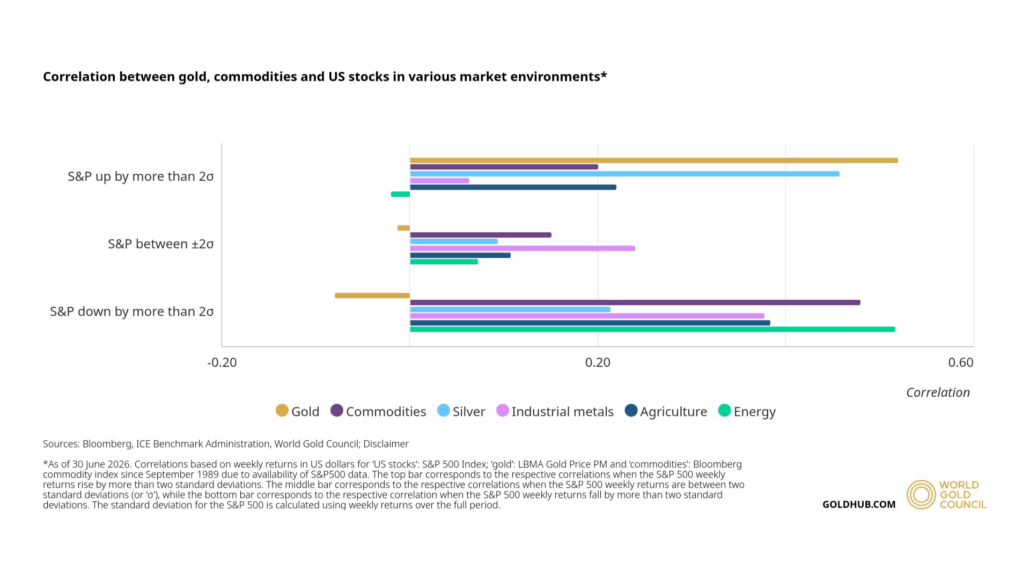
You can’t know in advance how excessive government debt will be addressed.
But you can understand where your wealth is most exposed, and whether your portfolio depends too heavily on any single outcome.
Prepare your portfolio for more than one outcome
No one knows exactly how policymakers will ultimately address excessive government debt. That makes it valuable to consider assets that don’t all depend on the same economic conditions to preserve wealth.
Gold is one such asset, with a long history of being held as a store of wealth across changing monetary and fiscal environments.
Traditional gold ownership comes with its own tradeoffs, however. Physical gold typically sits idle, leaving investors dependent on price appreciation for a return.
Gold leasing offers another approach. Qualifying investors can put a portion of their gold to work and earn a yield paid in additional ounces. This means they’re adding a potential source of return without requiring the gold price to rise.
Could productive gold fit your portfolio? Take our quick quiz to find out.