
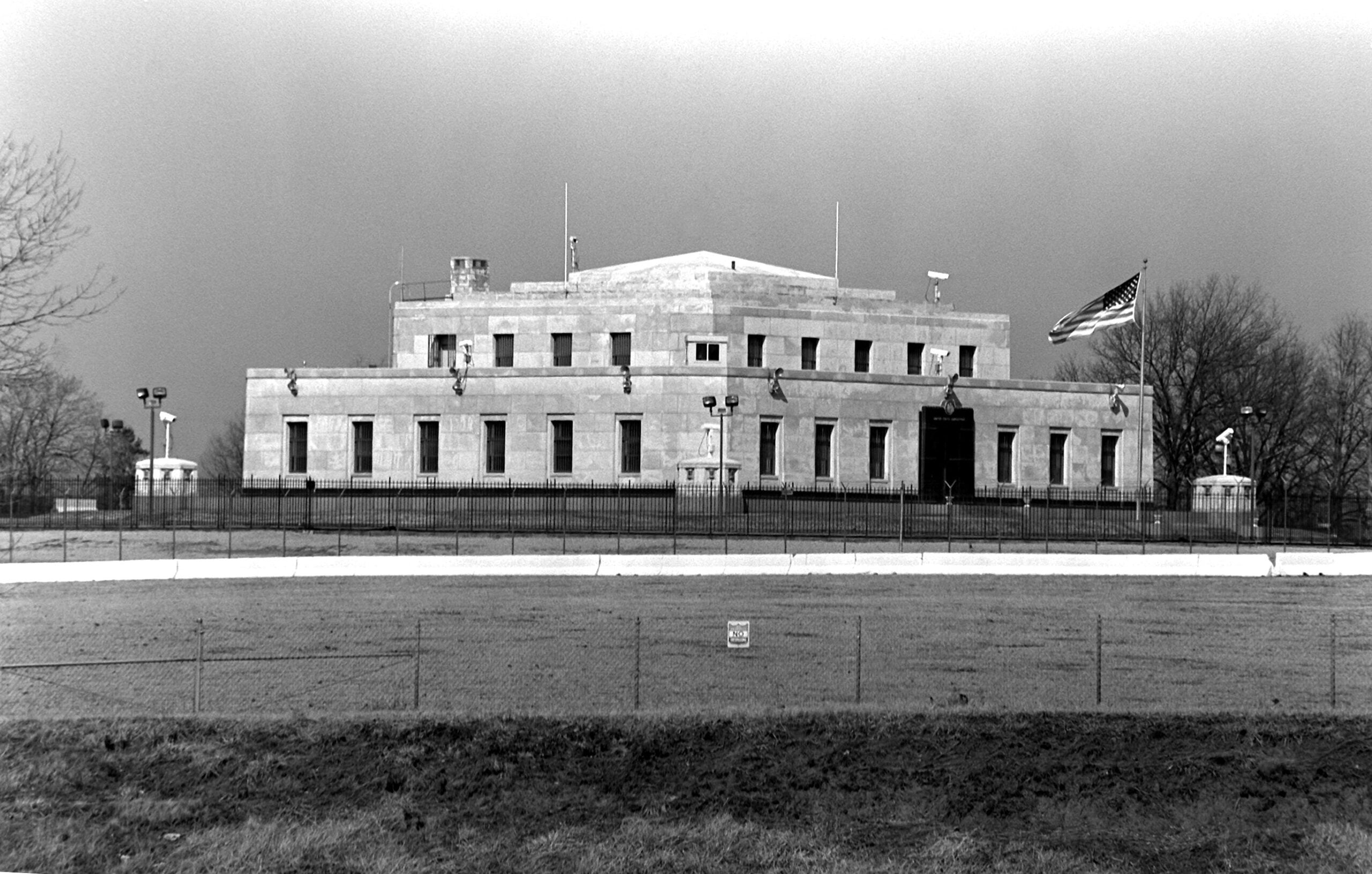

Yes, 56% of the U.S. gold reserve is still stored at the United States Bullion Depository in Fort Knox, Kentucky[1].
It’s the largest single storage location for the U.S. government’s gold reserves.
Yet the familiar image of Fort Knox leaves plenty unanswered. How much gold is actually inside its vaults? When was it last inspected? And how does its stockpile compare with the rest of the world’s gold?
How much gold is in Fort Knox?
Fort Knox holds 147,341,858.382 fine troy ounces of gold[2]. That works out to roughly 4,583 metric tonnes.
It represents more than half of the gold held in deep storage by the U.S. Mint, but Fort Knox once held far more gold than it does today. Its holdings peaked at approximately 649.6 million ounces on December 31, 1941[2], more than four times the amount stored there today!
The U.S. Mint says only very small quantities of gold have been removed from the facility for purity testing during audits. Otherwise, no gold has been transferred into or out of the depository for many years[2].
When was the last time anyone saw the gold in Fort Knox?
Authorized personnel have access to Fort Knox as part of its operation and oversight, but public access is extraordinarily rare.
The first time a gold vault was opened to someone other than authorized personnel was on April 28, 1943, when President Franklin D. Roosevelt inspected the Bullion Depository[3].
One of the most famous inspections occurred on September 23, 1974[3]. Persistent rumors that the vaults were empty prompted Treasury Secretary William Simon to invite members of Congress and journalists to inspect the gold[2].
The vaults opened to outsiders again in 2017, when Treasury Secretary Steven Mnuchin, Kentucky Governor Matt Bevin, and members of Congress visited the facility[2].
Is the gold at Fort Knox audited?
Yes, the U.S. Mint’s deep-storage gold reserves, including the gold held at Fort Knox, are subject to annual independent audits by the Treasury Office of Inspector General[4].
The Treasury OIG continues to publish audits covering U.S. gold reserves[5]. In December 2025, it published an audit of the U.S. Mint’s schedules of custodial deep-storage gold and silver reserves as of September 30, 2025 and 2024[6].
This process doesn’t make Fort Knox transparent in the way a public museum might be, but its holdings are reported by the government down to the fine troy ounce.
Can you go inside Fort Knox?
No, you can’t go inside Fort Knox. It isn’t open to the public, and the U.S. Mint explicitly states that visitors aren’t permitted at the bullion depository[2].
That sets Fort Knox apart from some U.S. Mint facilities where public tours may be available. Fort Knox isn’t a production facility; its purpose is the secure storage of bullion and other government valuables.
Its security has also become part of its mystique. The Mint notes that the actual structure and contents of the facility are known by only a few people and that no single person knows all of the procedures required to open the vault[2].
Where’s the largest stockpile of gold?
There isn’t a comprehensive international ranking of individual gold “stockpiles” or storage locations. The strongest available global data compare gold reserves by country and institution, rather than the amount physically stored in each vault or depository.
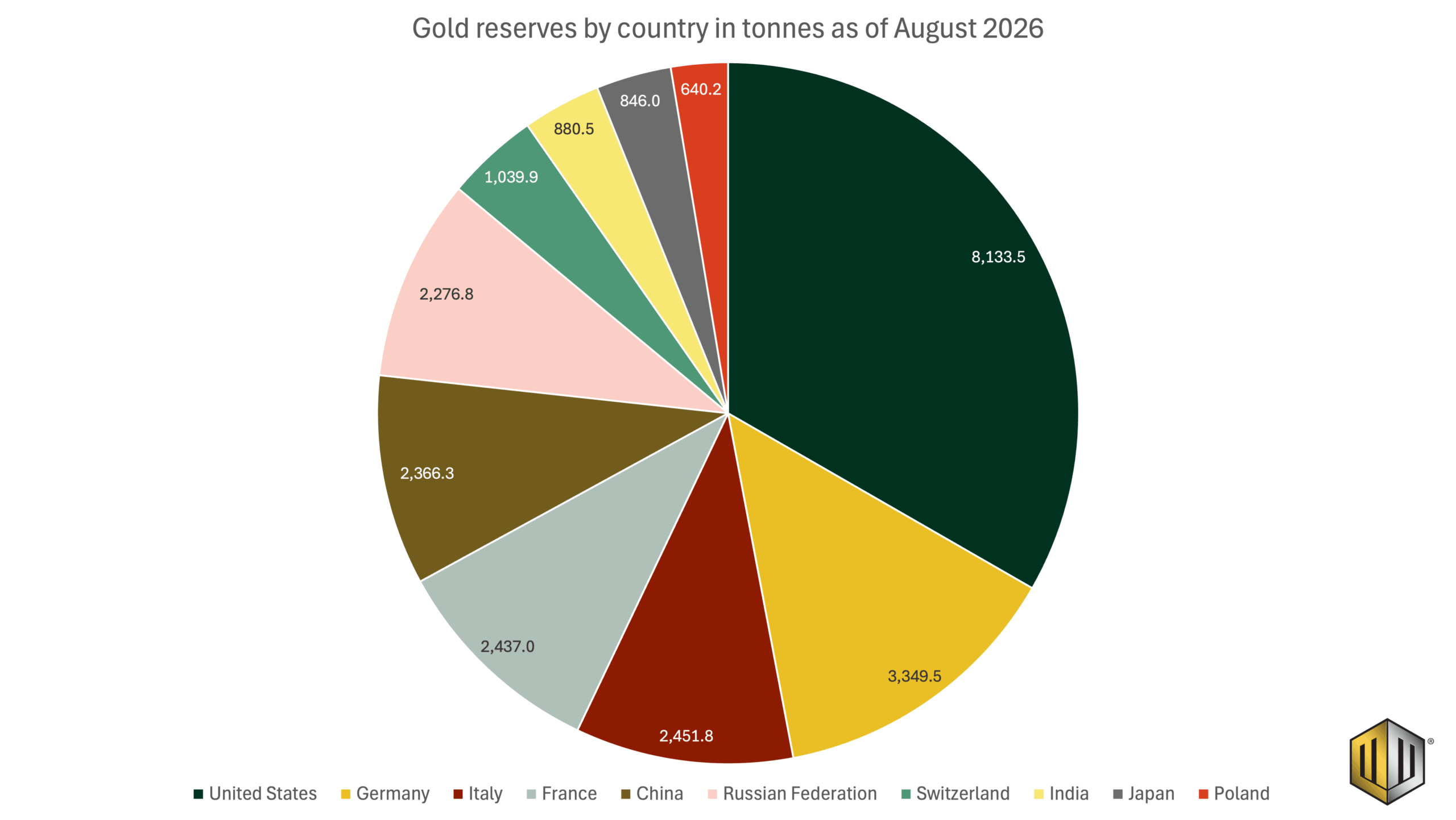
Who holds the most gold in the world?
The United States has the largest reported official gold reserves of any country in the world, holding approximately 8,133 metric tonnes[7].
The World Gold Council maintains an international database of official holdings using IMF International Financial Statistics and other sources, with the latest data reflecting reporting through 2026.
By that measure, the United States ranks first among countries, followed by:
- Germany
- Italy
- France
- Russia
- China

Does the U.S. really have 8,000 tons of gold?
Yes, the U.S. Treasury reported 261.499 million fine troy ounces of gold in the U.S. international reserve position, as of July 2026[8].
That converts to roughly 8,133 metric tonnes.
How much gold is there in the world?
There are approximately 288,600 metric tonnes of gold in the world that we can estimate.
As of the end of Q2 2026, the World Gold Council estimates that approximately 222,600 metric tonnes of gold exist above ground[9].
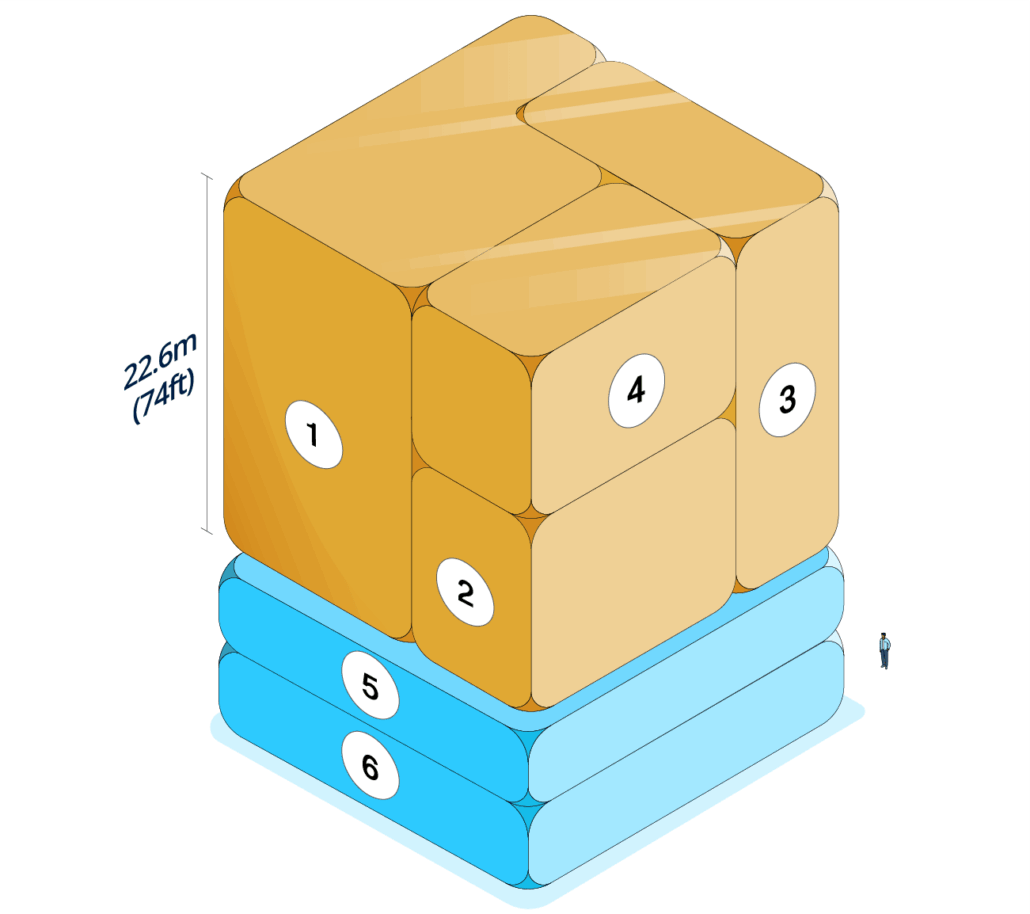
- Jewelry: ~99,700t, 45%, US$13.0tn
- Central banks: ~39,000t, 18%, US$5.0tn
- Bars, coins & gold ETFs:
- Bars & coins: ~47,800t, 21%, US$6.0tn
- Gold ETFs: ~4,000t, 2%, US$0.5tn
- Over-the-Counter (OTC) & other:
- OTC: ~10,000t, 4%, US$1.5tn
- Other: ~22,100t, 10%, US$3.0tn
- Reserves: ~61,000t
- Resources: ~ 114,400t
The U.S. Geological Survey separately estimates another 66,000 tonnes in worldwide gold reserves[10].
However, these estimate the amount of gold that has already been recovered or could potentially be recovered under current economic and operating conditions. They don’t account for every ounce of gold that physically exists on Earth.
Gold also exists in places where recovering it is impractical or impossible.
NOAA cites research finding roughly one gram of gold per 100 million metric tonnes of seawater in parts of the Atlantic and North Pacific[11].
Additionally, gold and other “iron-loving” elements migrated into Earth’s metallic core during the planet’s formation. Scientific research suggests that more than 99% of Earth’s gold may be locked within its core[12].
Where do you keep your gold?
Gold can be found everywhere from government vaults to seawater to thousands of miles beneath our feet. For gold owners, however, the ounces that matter are the ones they can actually own and access.
That makes where—and how—you hold your gold worth considering.
For decades, owning physical gold has generally meant choosing between keeping it yourself or paying someone else to store it. Yet those aren’t the only ways gold can be held.
Gold can also be put to productive use, empowering owners to earn a return denominated in the same asset they already chose to own.
Go beyond the negative carry costs associated with storage.
Sources:
- https://mises.org/power-market/how-much-gold-does-us-government-own-and-where-it
- https://www.usmint.gov/about/tours-and-locations/fort-knox
- https://www.usmint.gov/learn/history/historical-documents/inspection-of-gold-at-fort-knox
- https://oig.treasury.gov/system/files/2021-01/OIG-CA-11-007.pdf
- https://oig.treasury.gov/reports/audit-and-evaluation
- https://oig.treasury.gov/system/files/2025-12/OIG-26-002-%28locked%29.pdf
- https://www.gold.org/goldhub/data/gold-reserves-by-country
- https://home.treasury.gov/data/us-international-reserve-position/07242026
- https://www.gold.org/goldhub/data/how-much-gold
- https://pubs.usgs.gov/periodicals/mcs2026/mcs2026.pdf
- https://oceanservice.noaa.gov/facts/gold.html
- https://www.abc.net.au/science/archive/articles/2006/06/15/1663566.htm