

Updated on October 29, 2026
Many investors buy gold to reduce their exposure to the dollar. Then, when the dollar price of gold rises, some of those same investors consider selling their holdings to realize a profit.
This creates a potential contradiction: why exchange an asset you purchased to preserve your wealth for more of the currency you wanted to move away from?
The answer depends on why you own gold, how you measure its value, and whether you need access to dollars.
If you view gold as a long-term store of value, selling it reduces the number of ounces you own.
So how can you meet your dollar liquidity needs without depleting your gold holdings over time?
Please note: All content is provided strictly for general informational and educational use. This information should not be interpreted as financial advice, nor should it replace professional consultation with an advisor.
Should you sell your gold when the dollar price rises?
- If you seek dollar-denominated returns, selling may align with that objective.
- If you own gold to reduce your exposure to fiat currencies, then selling could be counterproductive.
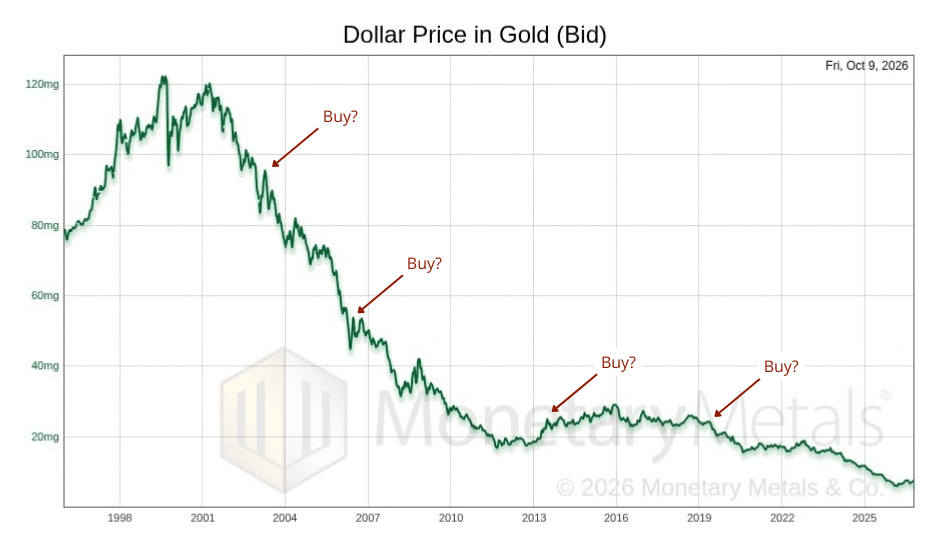
Investors often measure gold’s performance in dollars. When the gold price rises, the dollar value of their holdings increases, creating an opportunity to realize a gain.
However, a rising gold price can also reflect declining confidence in the dollar or a loss of its purchasing power.
For investors who own gold as a hedge, selling for a higher dollar price alone can mean reducing their holdings for the currency they’re trying to escape.
What history reveals about currency depreciation
History offers examples of what happens when currencies lose substantial value relative to gold.
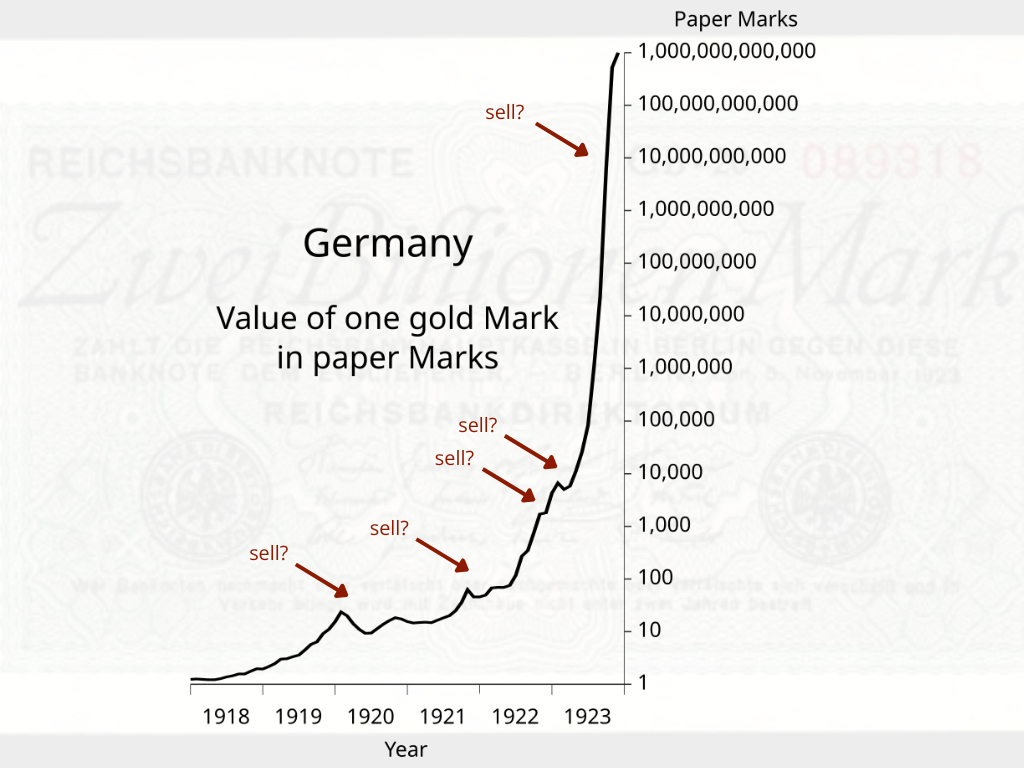
During Germany’s hyperinflation in the early 1920s, the number of paper marks required to purchase gold rose dramatically[1]. Investors who exchanged gold for paper marks early in that process would have faced further currency depreciation.
Venezuela provides another example of severe currency depreciation. As the bolívar lost value, its purchasing power relative to gold declined.
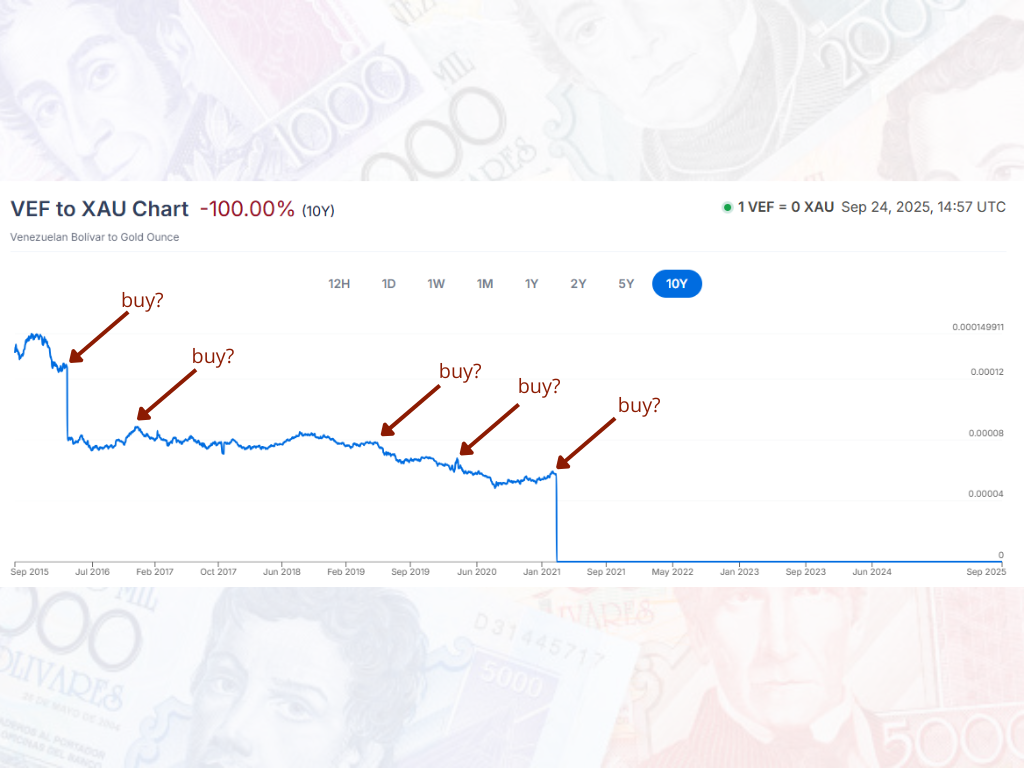
These are extreme historical examples, and neither provides a direct forecast for the U.S. dollar. But they illustrate a broader principle:
A rising gold price in a depreciating currency doesn’t necessarily mean that exchanging gold for that currency improves an investor’s position.
The same principle encourages investors to consider gold’s value from another perspective.
Of course, even investors who prefer to preserve their wealth in gold face a practical constraint.
Gold owners still need dollar liquidity
Most everyday expenses require dollars. Consequently, investors may need to convert some of their gold holdings into dollars to cover expenses.
Selling gold does provide liquidity, but each sale reduces the number of ounces they own. For someone who measures wealth primarily in ounces, this presents a challenge.
Selling gold can gradually reduce long-term holdings
If a farmer sells a portion of their productive land to cover living expenses, they reduce the amount of land available for future production.
Gold ownership presents a similar challenge, with one important difference: traditional gold holdings don’t generate income the way productive farmland can.
An investor who sells gold to fund expenses could eventually exhaust their holdings, even if the dollar price rises over time.
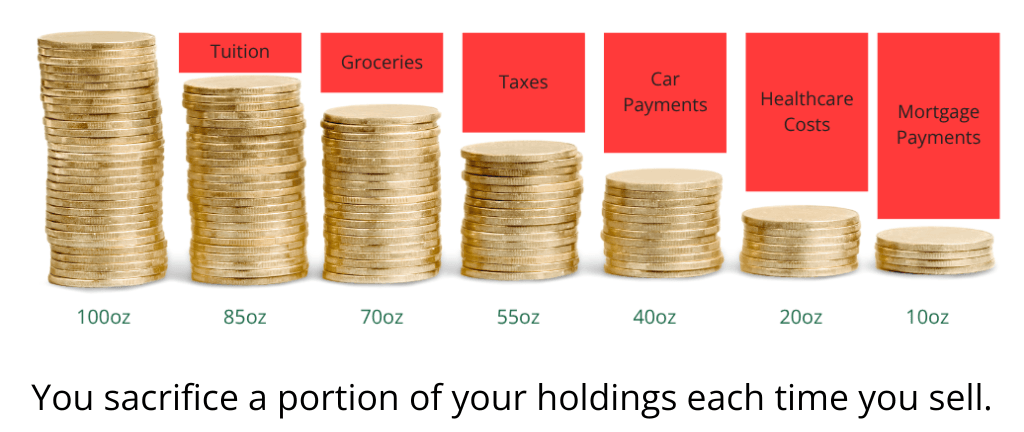
For investors who want to maintain their long-term gold holdings, the challenge is generating liquidity without repeatedly selling their principal.
Generate income from gold without selling your holdings
Owners of income-producing assets can use the income they generate to cover expenses without routinely selling the underlying assets.
For example, a property owner may collect rental income while retaining ownership of the property.

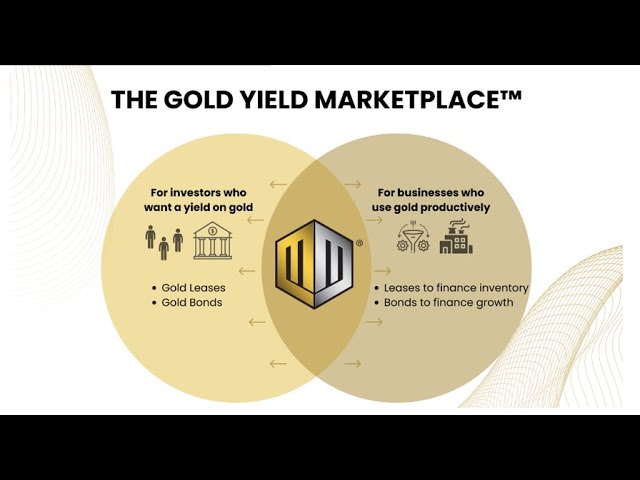
Gold can also generate income through leasing.
Through Monetary Metals, eligible gold owners can lease their metal to businesses that use gold in their operations, including refiners, mints, and jewelers.
In exchange, participating gold owners can earn a yield that’s denominated and paid in gold. That means they generate additional ounces in a productive asset that can be used for liquidity.
Use gold income to meet dollar liquidity needs
Imagine you lease 100 ounces of gold and earn a hypothetical annual yield of 4%, thereby generating four additional ounces.
You could sell those four ounces—for roughly $16,104.08 at the current price[2]—to meet dollar-denominated expenses while retaining your original 100 ounces.
This demonstrates how gold yield may supplement dollar liquidity needs without depleting your original holdings.
Reinvest gold income to increase your ounces
Alternatively, if you retain some or all of your gold yield and put those ounces back to work, you may benefit from compounding.
Assuming a constant yield and the continued commitment of your earned ounces, the same 4% annual yield would grow your holdings to approximately:
- 104 ounces after the first year
- 108.16 ounces after the second
- 126.53 ounces after six years
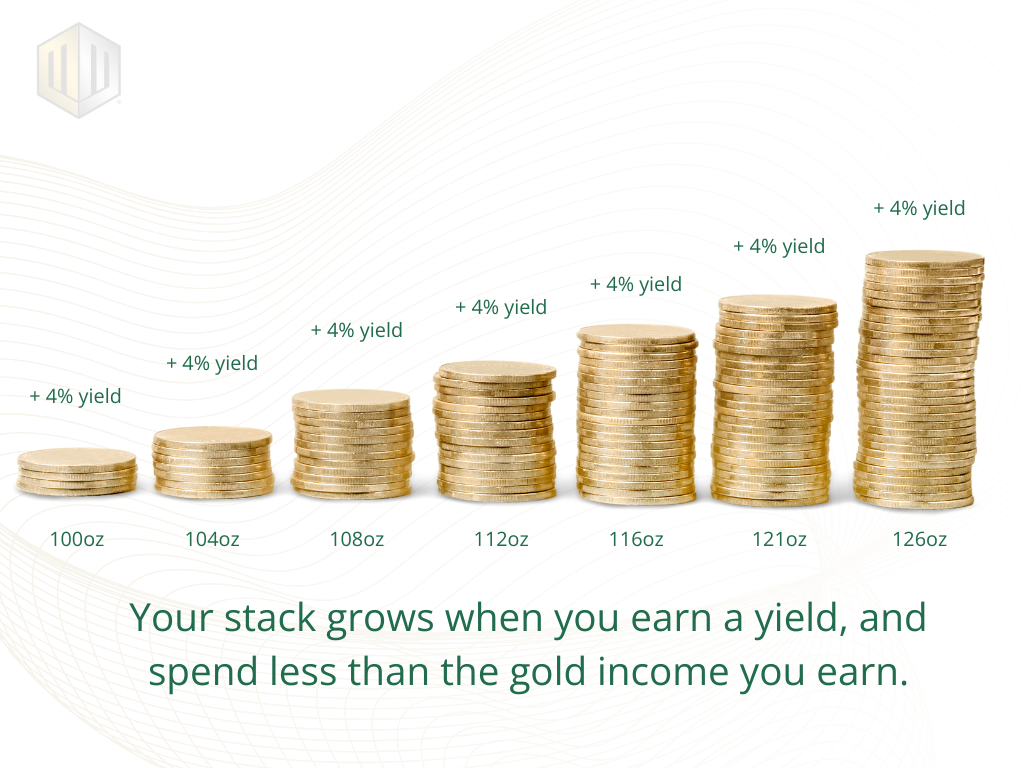
This illustrates a fundamental principle of building wealth: spending less than you earn and saving the difference.
Because saving money doesn’t work like it used to, gold leasing enables you to apply that principle to an asset with a long history of preserving purchasing power.
Preserve your gold. Liquidate or compound the income.
Owning gold can help preserve your wealth over the long term, but maintaining that wealth also means finding ways to meet your everyday expenses.
By leasing your gold, you could earn additional ounces to retain, reinvest, or convert into dollars when needed.
This expands the concept of financial independence beyond the dollar value of your assets. You can also measure your progress by the income those assets generate and how much of your wealth you preserve while meeting your needs.
Of course, gold leasing involves risk and may not align with everyone’s financial goals, liquidity needs, or time horizon.