

In March, the dollar price of gold dropped more than 5% in a matter of days, prompting widespread questions about what caused prices to reverse so suddenly. If you’re a gold and silver owner, you’ve likely been watching this with a growing sense of concern.
However, this scenario has played out dozens—if not hundreds—of times before, and those who’ve reacted emotionally often missed a critical point.
Below, we’ll explore what truly matters for your precious metals position and how to avoid selling the wrong portion of your holdings at the wrong time.
Why did the gold price fall in March?
The answer isn’t straightforward. Several macroeconomic and geopolitical factors could contribute to the decline, such as:
- Ongoing conflict in the Middle East
- Rising or volatile oil prices
- A stronger U.S. dollar
- Expectations of Federal Reserve interest rate policy remaining hawkish
Any one of these factors could pressure gold prices, and a combination of them could lead to sharp declines.
But does this signal the end of the gold bull market? Is the precious metals rally over?
Is gold going to crash in 2026?
Nobody can predict gold prices for the rest of the year. But if you’ve read our 2026 Gold Outlook report, you’ll know the fundamental macroeconomic drivers remain unchanged:
- Persistent global debt
- Currency debasement and inflation
- The long-term decline in purchasing power of fiat currencies relative to gold
That said, this doesn’t mean there won’t be gold price volatility. No asset class moves in a straight line, and gold is no exception.
There will be periods of both upward and downward price movement. This leaves many investors asking:
- Were recent gold prices a peak?
- Should I sell my gold now and attempt to buy it back later?
- Or is now a buying opportunity?
Is it a good time to sell your gold?
Rather than viewing gold purchasing or selling as a binary decision, it may be more useful to adopt a different framework.
A different way to earn from your gold
An alternative option to selling your gold is to lease it. Gold leasing empowers you to grow your gold ounces over time—which means your holdings can increase regardless of whether the gold price goes up or down.
Most gold owners hold gold as a long-term, permanent allocation in their portfolio and only sell when major liquidity needs arise.
In that context, strategies like gold leasing enable investors to grow their physical ounces over time, compounding their holdings rather than relying solely on price appreciation.
Reduce the impact of gold volatility by increasing your ounces
When you focus on growing your ounces, short-term price fluctuations begin to matter less. For example:
- If the gold price falls by 5% in a year, but your ounces grow by 4%, your effective loss is only 1% in dollar terms.
- If the price of gold rises by 5% in a year, and your ounces grow by 4%, your total return is 9% in dollar terms.
A new approach to liquidity
This framework also changes how you think about selling. Instead of selling your core position, you can sell a portion of your metal income while keeping your principal intact.
This enables you to meet liquidity needs—such as funding a college education, purchasing a car, or covering a medical expense—without permanently reducing your gold capital allocation.
By earning a yield on gold and silver monthly, and compounding your ounces over time, short-term price fluctuations become less significant.
The dollar price of gold is noise
In many ways, the dollar price of gold is simply noise, and often, it can be misleading. The typical investor buys gold to protect themselves from the risks of the dollar, yet they continue to evaluate their success in (often volatile) dollar terms.
This creates a contradiction: if the purpose of owning gold is to step outside the dollar system, then measuring its performance in dollars can lead to flawed conclusions.
When the price of gold rises, it’s natural to think that gold is becoming more valuable.
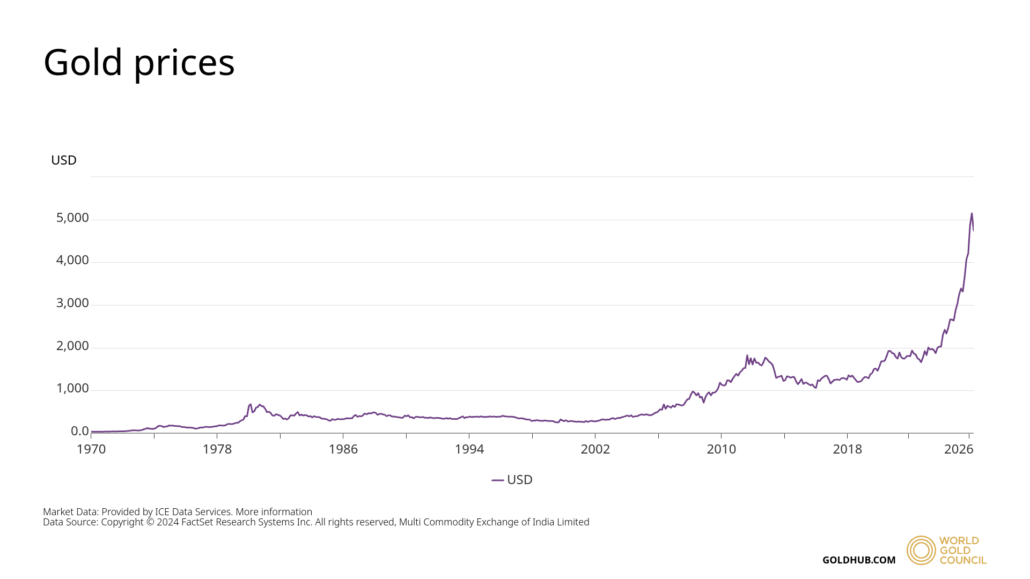
But in reality, a higher gold price is often a reflection of a weaker currency.
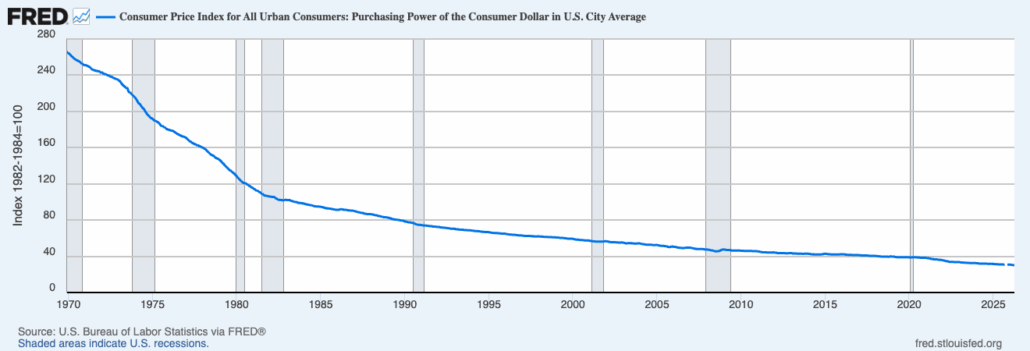
When you focus too heavily on the dollar price, you may be tempted to “take profits” by selling the gold you bought to escape the dollar. In doing so, you exchange an asset you acquired for long-term stability for the very currency you were seeking to hedge against.
What’s the value of measuring your wealth in ounces?
- Avoid the distortions caused by currency debasement.
- Maintain focus on long-term purchasing power.
- Evaluate whether your position is truly growing over time.
If your gold is sitting in a vault, it’s either collecting dust, or worse, it’s collecting storage fees. And if your gold isn’t growing, then those fees are shrinking its value. This makes the dollar price of gold the only metric by which you can measure your wealth, which will fluctuate in times of volatility.
By contrast, earning a fixed income paid in gold dampens volatility and offers liquidity that makes price drops less painful. This shift in perspective aligns more closely with the original purpose of owning gold.
When viewed through this lens, short-term price fluctuations become less important. What matters is not the day-to-day movement of the dollar price, but whether your gold position is preserving—and ideally, growing—your real wealth.
Measure and grow your wealth in ounces with Monetary Metals
Gold yield strategies offer a way to earn income in an asset that can’t be inflated away. If you’re concerned about volatility, this approach provides a more stable framework.
Rather than relying on price movements alone, you can participate in the long-term benefits of gold ownership while your holdings continue to work for you. Over time, this can reinforce a more resilient portfolio that’s less dependent on market timing and more focused on steady accumulation.
At Monetary Metals, we offer gold leases and gold bonds to free investors like you from reacting to short-term price movements. To start growing your gold position, discover how to earn up to 4% on gold in gold today.